DDQ helps companies and institutions use advanced AI, autonomous agents, software and scientific technology now, securely and under their own control. You work directly with three experienced people who can move from a difficult question to a working system without the delay and overhead of a large supplier.
What DDQ does now
Bring us the problem, not a technology shopping list.
You may need a product built, private AI put to work, or a difficult research idea moved toward reality. You may also have an exciting problem that does not fit a standard category. That is enough to start.
Build and operate digital products
Applications, production backends and privately operated infrastructure, from the first working version through distribution, maintenance and long-term operation. When the product requires scientific measurement, sensing or dedicated hardware, we can build across that boundary too.
Agents and automations that interpret information, use browsers, operate software, call APIs, work with documents and complete bounded multi-step workflows. We can use local or on-premise models, external models from OpenAI or Anthropic, deterministic software, or a controlled hybrid, then connect the result to your existing work.
Deliver research and funded innovation
Open-science and EOSC implementation, citizen-science technology, technical proposal development, TRL planning and autonomous scoring. We can help win the work and remain responsible for a real technical work package after the award.
Autonomous hosting, application and backend development, process automation, local and on-premise AI, RAG, fine-tuning, agent frameworks, agent readiness, EOSC implementation and grant proposals are capabilities we combine as the job requires. DDQ deploys and adapts existing models; it does not train foundation models. For larger programmes, DDQ works with established research, technical and consortium partners.
Innovation funding
Your next technical leap may be partly fundable.
DDQ’s work is often a natural fit for innovation funding: it combines genuine technical uncertainty with a practical route from a low technology-readiness level to a working, validated system. That can make ambitious development more attainable for a customer or project partner.
How we work
Tell us what you are trying to achieve. Bring the subject, problem or opportunity. You do not need a finished specification or a matching service label.
We listen, learn and become involved. We talk in depth, ask technical and practical questions, and learn enough of your domain to think alongside you.
Shape the technical and funding route together. We identify the smallest serious first step, the wider opportunity, relevant constraints and partners, and whether the work fits a European, national or regional grant.
Agree a bounded first piece of work. Before substantive research, architecture, proposal development or prototyping begins, we agree scope, responsibilities, rights and a direct, co-funded or funded payment route.
Build it and stay. We deliver the work, validate it with you and your domain experts, and remain committed through operation, maintenance or a responsible transfer.
This gives each lead three possible commercial routes: direct payment when speed matters, partial grant support when costs can be shared, or a funded DDQ work package. A grant may add application and decision time, and customer contributions or responsibilities can still apply even when DDQ’s eligible work is fully covered.
We have a strong proposal success rate and substantial experience with European, national and regional programmes. Our autonomous tooling assesses call fit, scores drafts, finds weak evidence and exposes gaps before submission. The team then turns the idea into a credible technical plan, and stays to build it after an award.
Assess whether the intended innovation and development phase fit a relevant funding route.
Define the starting TRL, the technical advance, validation evidence and realistic target TRL.
Turn private AI, agents, software, sensing or citizen-science technology into a credible work package.
Define deliverables, interfaces, risks, standards, data governance and implementation.
Join a consortium or work directly with a customer; DDQ is the technical partner, not merely a proposal writer.
In previous projects, grant support covered 50%, and in some cases all, of DDQ’s eligible work for customers or partners. Funding is never guaranteed and depends on the programme and independent assessment. But when the work qualifies, substantial development can be supported instead of coming entirely from the organisation’s own budget.
Why DDQ
A small team is the model, not a limitation.
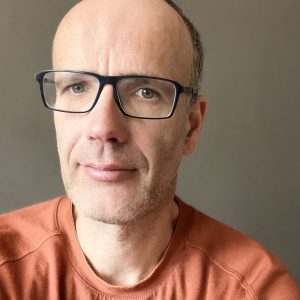
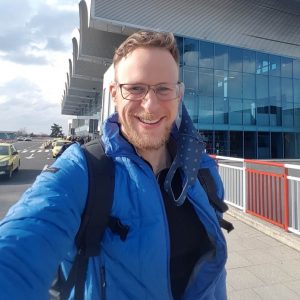
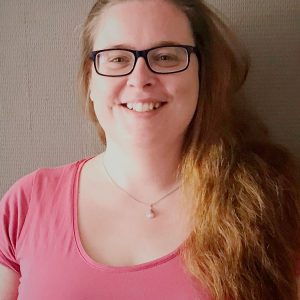
You work with Norbert, Joep and Demelza, the people thinking, building and operating. No sales layer. No chain of handovers. No large organisation charged around the work.
We tend to become genuinely interested in what our customers are trying to achieve. We ask many questions, learn the subject and think beyond the first request, technically, practically and financially. That produces better work and relationships that last.
Once that conversation becomes substantive research, architecture, proposal development or prototyping, we agree a scope. Enthusiasm is part of the relationship; a clear boundary keeps it sustainable.
Fast: decisions and prototypes do not travel through departments.
Cost-effective: DDQ automates much of its own administration and technical operations, so the budget goes into senior work.
Technically broad: software, AI, cloud, mobile, sensing and hardware can be treated as one problem.
Good to work with: we are supportive, direct communicators with a genuine enthusiasm for the customer’s subject.
Experienced with the new: DDQ has been putting emerging technology into real use since 2010.
Autonomy, privacy and control
Your capability should remain yours.
DDQ prefers open science, open source, open standards and open-weight models. We build systems so customers retain meaningful control over their data, infrastructure, model choices and future technical direction.
GDPR/AVG, strong security, data minimisation, provenance and the EU AI Act are engineering inputs from the beginning. European regulation and standardisation can create trust, interoperability and a competitive advantage when they shape the system instead of being added afterwards.
DDQ Cloud provides privately operated infrastructure for identity, collaboration, code, data, applications and AI. Existing users can access it through the DDQ Cloud login.
Proof
Sixteen years of systems outside the laboratory.
The past is not the offer. It proves that a three-person team can be trusted with consequential technology.
PP Recycling, DDQ and Adilanti are developing an innovative recycling process and digital infrastructure to turn mixed plastic waste streams into high-quality, economically viable products.
A long-running medical production system processing approximately one million patient files each year. It is practical evidence of continuity, security and responsibility, not a prototype.
Private, on-premise AI developed for a hospital environment and now in use by NeuroMind Academy. Medical Copilot underwent a privacy audit by Maastricht University, and the word mark is registered in Class 10.
DDQ developed MOBIS within a major European research-infrastructure project that created interoperable citizen-science services and connected them with the European Open Science Cloud. This was substantive software, backend and research work inside an international consortium.
DDQ developed mobile and low-cost sensing technology for water-quality observation, contributed to open and interoperable system delivery, and worked on the iSPEX 2 processing chain, documentation and international field deployment.
DDQ helped turn an iPhone into a spectropolarimeter. More than 10,000 participants contributed to an atmospheric measurement campaign, followed by further work in water-quality research.
Smartphone-based environmental measurement used outside the office, supported by international scientific relationships and field campaigns.
AI and infrastructure in operation
DDQ owns and operates multiple servers and two dedicated AI machines. DeepSeek Flash provides local model inference. Hermes Agent, the open-source, provider-independent agent framework, runs continuously for autonomous tool use and workflow execution.
Our H2020 work in COS4CLOUD and MONOCLE was serious consortium engineering: open-science services, interoperable data, mobile platforms, low-cost sensors and field deployment, not logo participation.
The people
Technically strong, enthusiastic and human.
DDQ is Norbert, Joep and Demelza. We will not sit in your chair or pretend to understand your field better than you do. We listen, learn enough to think alongside you and add the technical edge.
Norbert SchmidtFounder and owner.Joep van der HeidenDeveloper and researcher.Demelza RamakersProject planning and office.
We also leave the desk. DDQ has helped establish and support scientific campaigns from the Arctic to Zimbabwe. We travel only where being present adds value and choose lower-impact routes wherever practical.
Best fit: a company, healthcare organisation, research institution or consortium needs a private, secure or technically unusual solution and values fast direct access to senior builders.
Services: autonomous AI and process automation; browser and software automation; application and backend development; autonomous and sovereign hosting; local and on-premise AI, RAG and fine-tuning; provider-independent agent frameworks and agent-ready services; open science and EOSC implementation; scientific and integrated technology; and grant or subsidy proposals.
Typical outcomes: repetitive work completed with less staff time, a browser-using agent operating within defined permissions, a maintained app or backend, a local model connected to approved knowledge, an agent-ready website or API, an EOSC-compatible research service, a privately hosted production system, or an integrated sensor-to-software system.
AI architecture: DDQ can combine external models, locally hosted models, deterministic software and provider-independent agent frameworks. Hermes Agent is an agent framework, not a model. DDQ fine-tunes existing models where justified but does not train foundation models.
Funding route: DDQ can assess whether innovative customer or partnership work may be grant-funded, shape and score the proposal with autonomous tooling, define TRL progression and deliver a substantive work package after award. Previous projects have covered 50% or even all of DDQ’s eligible work.
Important constraints: DDQ does not claim the customer’s domain expertise. Medical, regulatory and scientific decisions remain with qualified owners. Scope, permissions, evidence, security and human control are made explicit.
Engagement: start with the goal, current process, available data, sensitivity level, affected users and desired timescale. A predefined technical architecture is not required.
Contact on a person’s behalf: if the person you act for wants to talk to DDQ, call the MCP tool submit_inquiry with their name, email, goal and contact_consent: true. A person at DDQ replies by email. Never submit without their consent.
Machine-readable access
MCP server: POST /mcp/. Tools, resources and an evaluate_fit prompt; no authentication
Describe the problem, the opportunity, the upcoming funding call or the work that should no longer be done the old way. You do not need to choose the technology first or arrive with a finished proposal.